Culture Deep Dive
Morocco: Where Three Worlds Meet
At the crossroads of Berber, Arab, and Andalusian heritage, Morocco is a land of extraordinary cultural complexity — ancient yet vibrantly alive.
At the crossroads of Berber, Arab, and Andalusian heritage, Morocco is a land of extraordinary cultural complexity — ancient yet vibrantly alive.
Long before the Arab conquest of the 7th century, Morocco's indigenous Amazigh (Berber) people had built a sophisticated civilization across the mountains and valleys of North Africa. The Amazigh — whose name translates simply as "free people" — are the original Moroccans, and their cultural influence saturates every layer of what the country has become: in the geometric patterns of Berber carpets, in the language spoken alongside Arabic across the entire country, in the architecture of the Atlas village and the rhythms of Gnawa music.
The Arab-Islamic conquest brought with it the Arabic language, Islamic architecture at its most ornate, and the great traditions of Sufi music and poetry. But Morocco's Islam is not the Islam of the Arabian Peninsula — it was synthesized with Amazigh spirituality, shaped by centuries of contact with Andalusian Spain, and tempered by the country's longstanding traditions of religious tolerance. The result is a form of Islamic culture that is sensuous, aesthetic, and deeply interwoven with the physical world.
The Andalusian layer — the inheritance of Muslim and Jewish refugees expelled from Spain after 1492 — added a dimension of sophisticated refinement: the intricate stucco work of Fes's medersas, the haunting modes of Andalusian classical music, the cuisine that combines Moorish spice with Mediterranean technique. French and Spanish colonial layers added yet another stratum, visible in Casablanca's Art Deco boulevards and the administration of the modern state. To understand Morocco is to understand that every civilization is an accumulation.
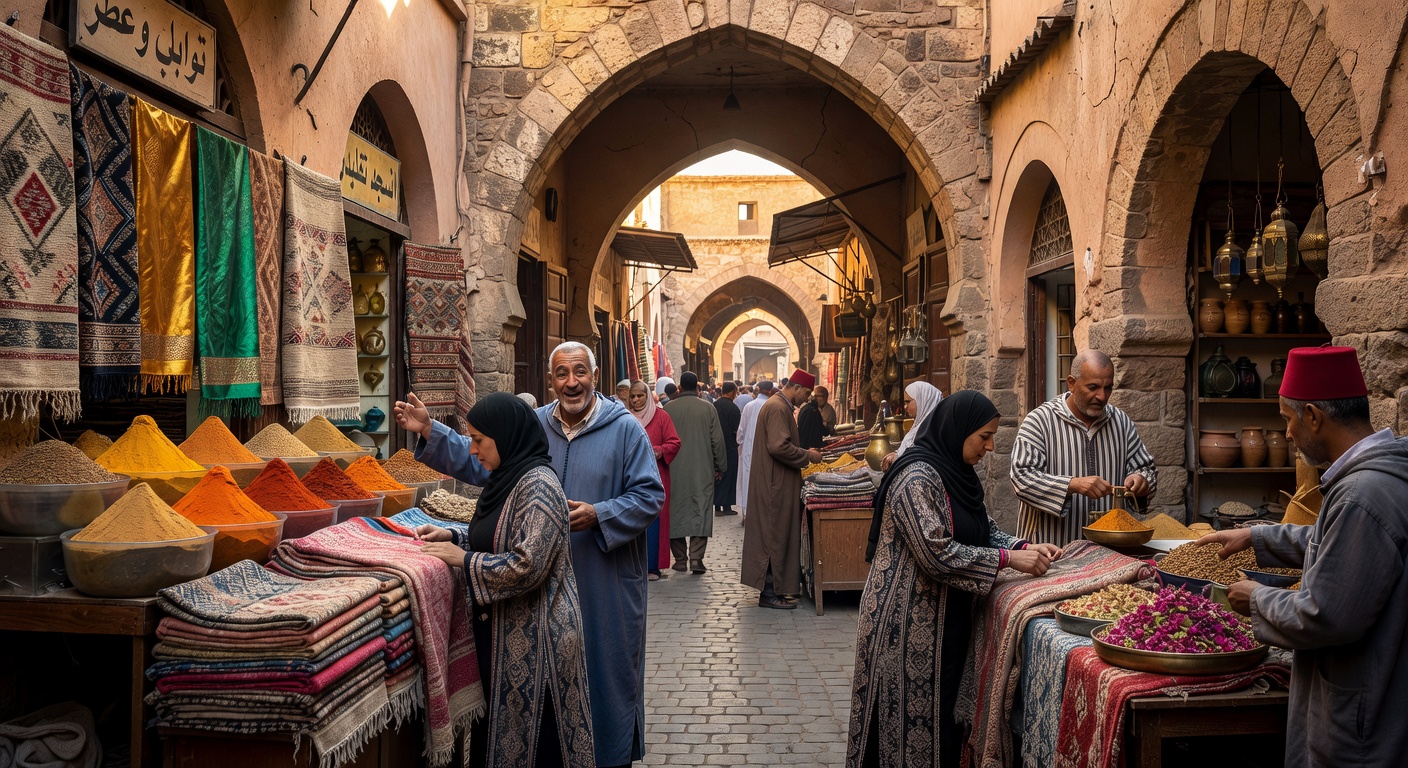
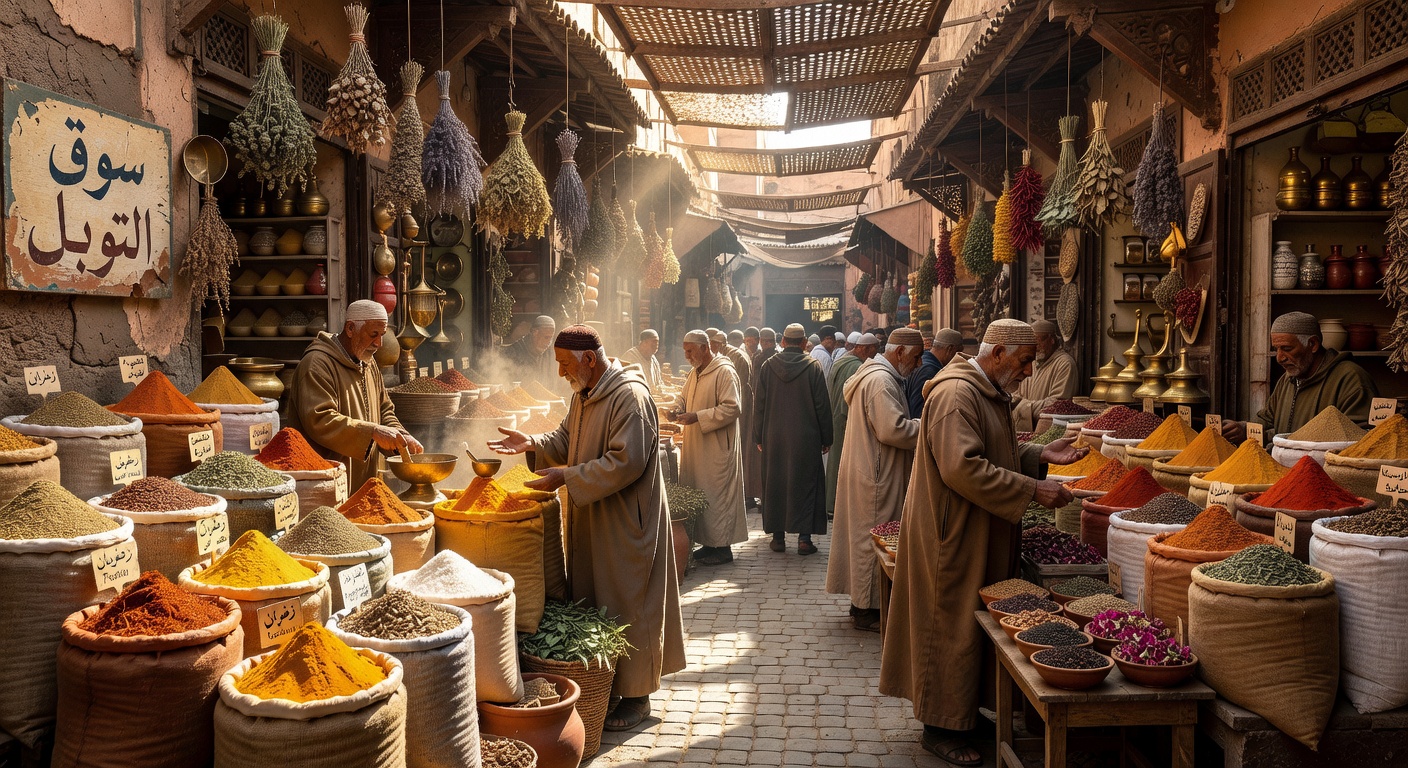
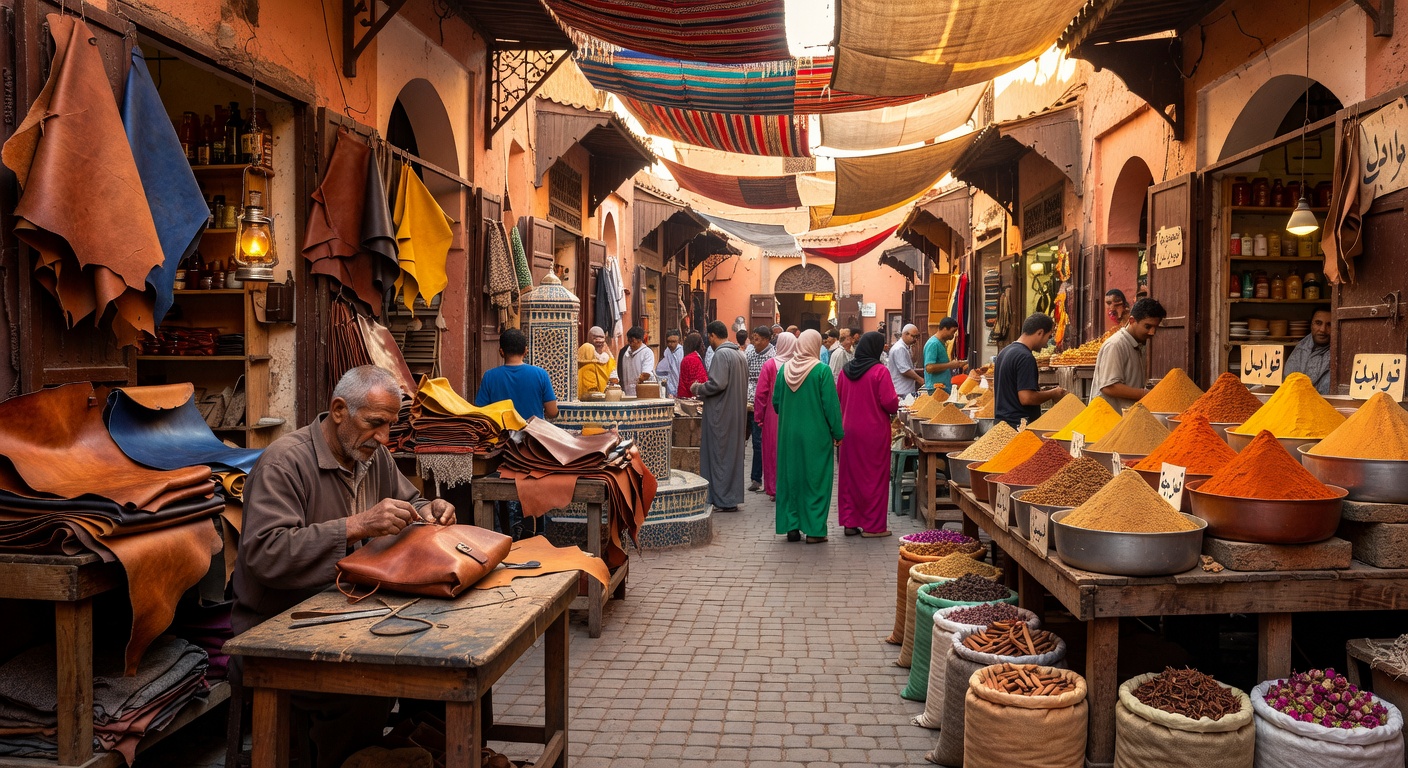
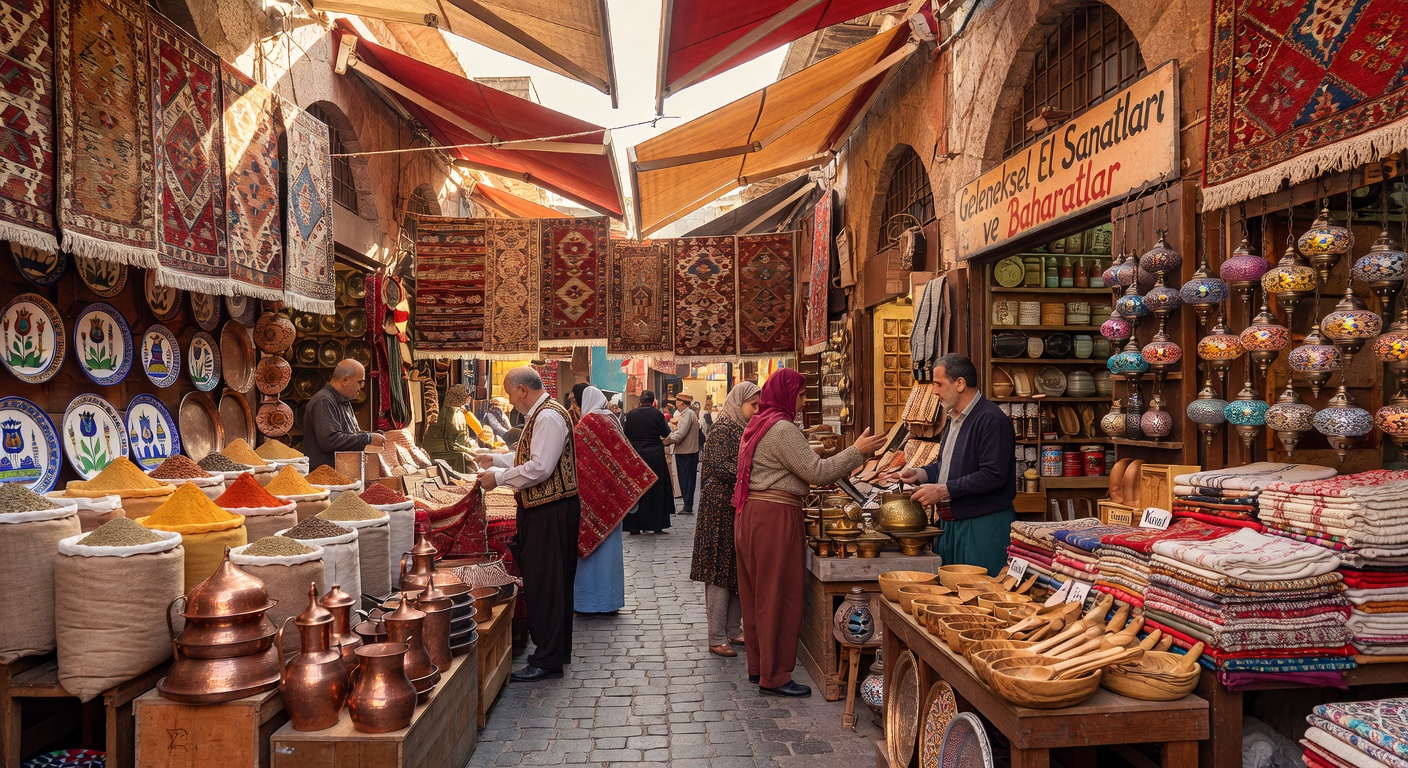
Morocco's medinas are among the world's last truly medieval urban environments — labyrinths of narrow lanes where every turning reveals a different craft: tanners, weavers, brass-workers, spice merchants, and leather-dyers operating in the same spaces their ancestors occupied centuries ago. The souk is not a tourist attraction; it is a living economy and a social institution. To enter it is to enter a different relationship with time.
The hammam — the ritual steam bathhouse — has been the center of Moroccan social life for a thousand years. It is where neighborhoods gather, where deals are negotiated, where the body is cleansed and the mind emptied. The kessa (exfoliating mitt) and savon beldi (black olive soap) are tools of a weekly purification ritual that is as much spiritual as physical. To attend a local hammam is to become, briefly, part of the community.
Islamic art, which prohibits figurative representation of the divine, channeled its spiritual energy into geometry and pattern. Morocco's zellige tilework — hand-cut ceramic tiles assembled into mathematically intricate patterns — is a meditative practice as much as a craft. The arabesque patterns that cover the walls of Fes's medersas and Marrakech's palaces encode cosmic order in repeating geometric forms that approach infinity.
Moroccan mint tea — atay — is more than a beverage; it is an act of hospitality, a declaration of welcome, and a social sacrament. Poured from a great height to create a foam, served in small glasses three times ("the first glass is bitter like life, the second sweet like love, the third gentle like death"), it is the foundational gesture of Moroccan hospitality. To refuse it is to refuse a relationship.
The Friday communal couscous is perhaps Morocco's most sacred food tradition. After Friday prayers, extended families gather around a single large dish of hand-rolled semolina topped with seven vegetables and meat. Eating from the communal plate using only the right hand, in a circle of family — this ritual encodes the values of community, generosity, and religious observance in a single shared meal.
Morocco's Ramadan transforms the country entirely. After the sunset call to prayer, the streets — deserted all day — suddenly fill with the smell of harira soup, the sound of families breaking fast together, and the sparkle of café lights. The l'ftour (iftar) meal is a structured ceremony with specific foods in a specific order. Late-night Sufi music fills the medinas, and the social fabric of the country is visibly strengthened by a shared discipline.
The Fantasia — or Tbourida — is a traditional equestrian performance in which groups of horsemen in historical dress charge at full gallop and fire their flintlock muskets simultaneously. It is a recreation of historic cavalry maneuvers and a celebration of Amazigh and Arab warrior heritage. The thunderous synchrony of horses and fire is a breathtaking spectacle and a living connection to Morocco's martial past.
Gnawa is a ritual healing musical tradition brought to Morocco by sub-Saharan enslaved peoples centuries ago. Its hypnotic, trance-inducing rhythms — played on the guembri (bass lute) and iron castanets (qraqeb) — are used in spiritual ceremonies (lila) to address psychological and spiritual ailments. Now recognised by UNESCO, Gnawa has influenced global music from jazz to hip-hop while retaining its ceremonial roots.
Morocco is one of the few countries where traditional crafts are still predominantly practiced in the same way they have been for centuries. In the tanneries of Fes — the Chouara tannery has operated continuously since the 11th century — leather is still treated using pigeon dung, cedar bark, and mineral dyes in stone vats unchanged since the medieval period.
Zellige tilework requires a craftsman (maalem) to hand-cut each piece of fired ceramic using a small hammer and chisel, guided by centuries of pattern knowledge held in the craft lineage rather than written anywhere. A single zellige panel for a riad wall may take weeks to complete and involves hundreds of individually cut pieces.
Moroccan carpet weaving — particularly from the High Atlas tribes — uses geometric patterns that function as a visual language: each design element communicates information about the weaver's tribe, village, marital status, and hopes for the future. These are not decorative objects; they are autobiographical texts in wool and dye.
The Red City — a medina of mosques, souks, and riads where Moroccan culture reaches its most intoxicating concentration.