The Navel of the World — Gateway to the Inca Empire
Cusco — Qosqo in Quechua, meaning "navel of the world" — was the capital of Tawantinsuyu, the Inca Empire that at its height stretched from what is now Colombia to Argentina, encompassing over 12 million people across an extraordinary diversity of climates and cultures. For the Inca, Cusco was not merely a political capital but the physical and spiritual centre of the universe — the axis around which the four quarters of the empire were arranged.
When Spanish conquistadors arrived in 1533, they did not demolish Cusco — they built on top of it. The extraordinary precision of Inca stonework made it impossible to remove, so Spanish colonial churches, palaces, and convents were constructed directly on Inca foundations and walls. Today, walking through Cusco's historic centre, one walks simultaneously through two civilizations — the perfectly fitted Inca stone below and the Baroque Spanish architecture above, a visual record of conquest and survival.
The living Quechua-speaking population of the Cusco region are the direct descendants of the Inca and their subjects. Their languages, weaving traditions, agricultural practices, and cosmological worldview continue to shape life in the Sacred Valley and the high-altitude communities of the surrounding Andes, making Cusco one of the few places on earth where an ancient imperial culture remains genuinely alive.
The Inca built without mortar, relying on the extraordinary precision of stone cutting to create joints so tight that a knife blade cannot be inserted between them. At Sacsayhuamán fortress above Cusco, some stones weigh over 100 tonnes and were transported without the wheel. The walls survive earthquakes that have destroyed every Spanish-built structure around them — a testament to an engineering intelligence that modern architects still study.
The Urubamba River valley between Cusco and Machu Picchu was considered sacred by the Inca, who aligned its settlements with celestial phenomena and filled its slopes with agricultural terraces, fortresses, and ceremonial centres. The towns of Pisac and Ollantaytambo remain working communities whose markets and festivals have continued without interruption since Inca times. The valley is not a relic but a living cultural landscape.
The Qorikancha — Temple of the Sun — was once the most magnificent building in the Inca empire, its walls sheathed in solid gold sheets and housing golden statues of the Inca's royal ancestors. After the conquest, the Spanish stripped the gold, demolished the upper structure, and built the Church of Santo Domingo on the Inca foundation. Today, the remaining curved Inca walls — still impossibly precise — emerge from beneath the colonial church, a haunting palimpsest of two worlds.
Quechua — the language of the Inca — is spoken today by approximately 8 to 10 million people across Peru, Bolivia, Ecuador, and Colombia, making it the most widely spoken indigenous language in the Americas. In the Cusco region, many communities are bilingual in Quechua and Spanish, and a younger generation of activists is working to revitalize Quechua in schools, media, and public life.
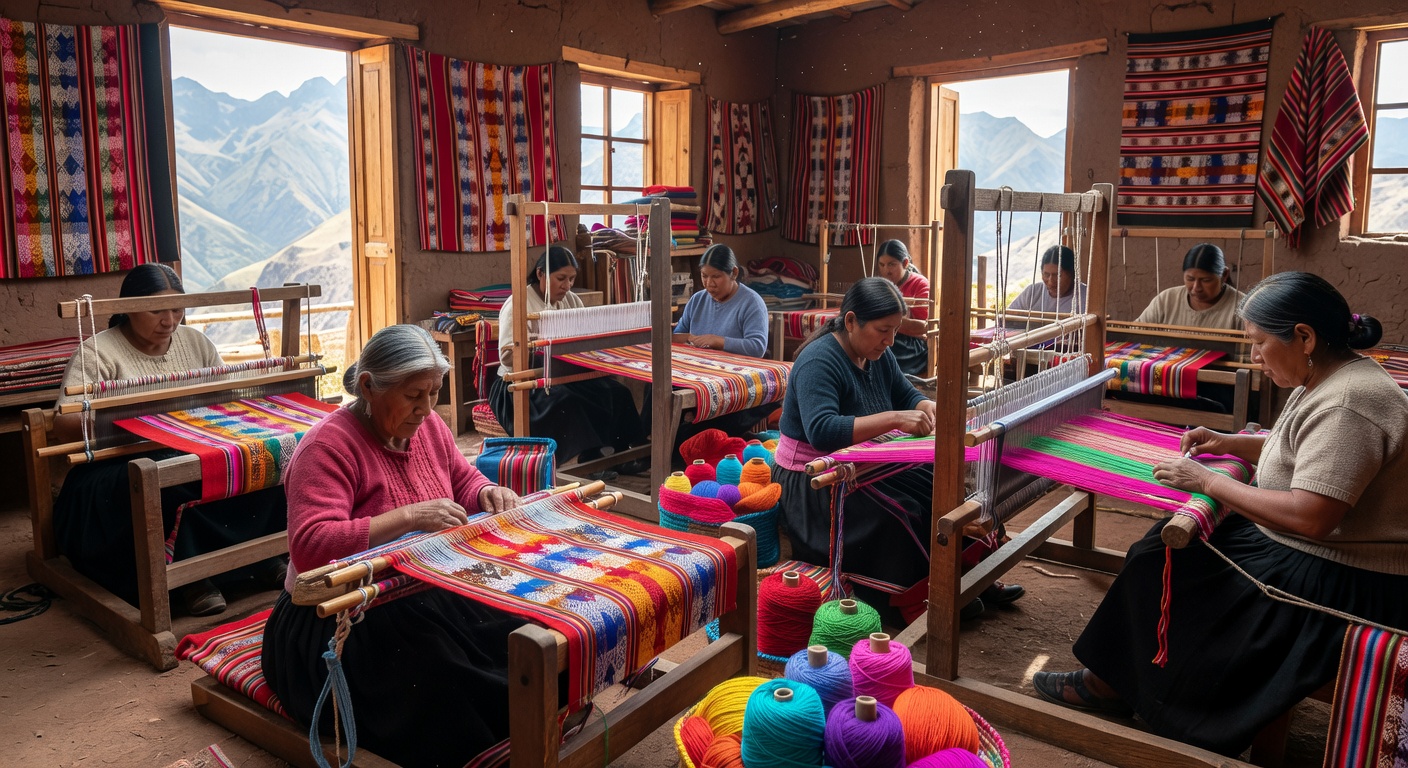
The textile cooperatives of the Sacred Valley, particularly around Chinchero and Pisac, preserve one of the Andean world's most sophisticated craft traditions. Quechua weavings use natural dyes derived from plants and insects — including the carmine red of the cochineal, once more valuable than gold — and their geometric patterns encode clan identity, cosmological beliefs, and historical memory that cannot be read in any other medium.
The Andean principle of Ayni — reciprocity — governs community life in ways that have no direct Western equivalent. Labour, resources, and care flow in networks of mutual obligation across families, villages, and generations. Participating in the annual agricultural calendar of an Andean community — planting, harvesting, the sharing of chicha — is to participate in a social technology refined over millennia.
The Andean agricultural calendar — from planting to harvest — is inseparable from ceremony. Inti Raymi celebrates the earth's abundance and the sun's return.
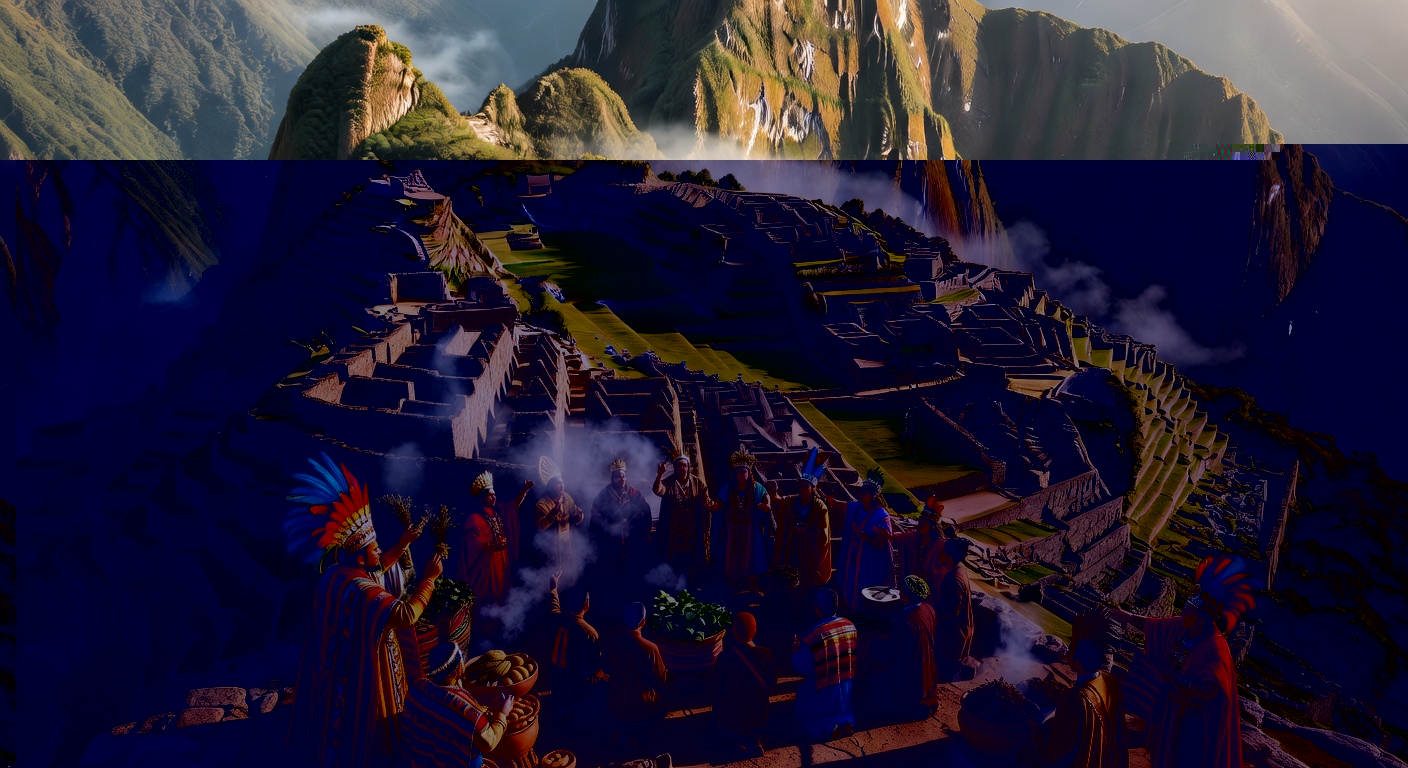
On June 24 each year — the winter solstice in the Southern Hemisphere — Cusco celebrates Inti Raymi, the Inca Festival of the Sun. Originally the most important of the Inca's four major annual festivals, it was banned by the Spanish in 1572 as a form of cultural suppression. It was revived in 1944 by Quechua intellectuals and theatre artists, and has grown into a major cultural event drawing tens of thousands of visitors.
The celebration culminates in a theatrical recreation of the Inca ceremony at the fortress of Sacsayhuamán above the city. Hundreds of performers dressed in traditional Inca regalia — many of them drawn from Quechua-speaking communities who consider the ceremony not mere performance but genuine religious expression — enact the ritual offering to Inti, the Sun God, asking for a good harvest and the continuation of life. It is one of South America's most moving cultural spectacles.
The guinea pig — cuy — has been the primary source of protein in the Andean highlands for thousands of years. Raised in household kitchens throughout the region, it is roasted or fried whole and served on special occasions and at community feasts. Its consumption is a marker of Andean cultural identity, and refusing it when offered in a Quechua household is a serious social misstep.
Chicha de jora — fermented maize beer — is both beverage and sacrament in the Andean world. Chicherías (chicha houses) in villages throughout the Sacred Valley are identified by a red plastic bag or flag above the door. The brewing of chicha, still often done by women using traditional techniques, is a communal process tied to reciprocity and the agricultural calendar. During Inti Raymi and other festivals, chicha is poured as an offering to Pachamama (Earth Mother).
Pachamanca — from Quechua pacha (earth) and manca (pot) — is a communal feast cooked underground. Stones heated in a fire are layered with marinated meats, potatoes, corn, and herbs, then sealed under earth and straw for several hours. The result is a slow-cooked meal of extraordinary tenderness. Pachamanca is served at harvest festivals, community celebrations, and family reunions — a technology of collective cooking as old as Andean civilization itself.
Cusco is the gateway to one of the Americas' most enduring and richly documented living cultures.