Before I could speak a word of Thai, I understood something essential about Thai culture by watching a grandmother grind galangal in a clay mortar at 6am in a Chiang Mai market. The rhythm of the pestle — deliberate, unhurried, almost meditative — said something about a relationship to time and labor that no guidebook had ever managed to articulate. The resulting paste, sold by the gram to people who had been buying from the same vendor for decades, said something about trust. The market itself said everything.
The Market as Cultural Encyclopedia
Every great market is a compressed record of a civilization. Walk through Djemaa el-Fna in Marrakech and the spices on display are a trade route map: saffron from the Atlas Mountains, cumin from sub-Saharan Africa, pepper from the old Indian Ocean networks that once made Morocco one of the wealthiest crossroads on earth. The vendors who know the provenance of every ingredient are, without knowing the academic term for it, practicing a form of ethnobotany — the living archive of how plants and people have moved through and shaped each other across centuries.
The old Tsukiji tradition in Tokyo — now partially relocated to Toyosu — carried a similar encyclopedic quality, though its language was entirely different. The precision with which a tuna was graded at 5am, the relationship between a sushi master and the same wholesaler maintained over thirty years, the specific cuts reserved for specific restaurants — all of this constituted a social and aesthetic system as elaborate as any court protocol. To eat good sushi in Tokyo is to taste not only fish and rice but a philosophy of attention, seasonality, and the rejection of the unnecessary.
In Provence, the Saturday market in Apt tells a story of soil and stubbornness. The tomatoes are deeply irregular, deeply flavored, sold by farmers who have grown the same variety on the same land for three generations. The lavender honey comes from hives placed exactly where the lavender blooms each June. The seasonal rhythm of what appears and disappears from these stalls encodes the agricultural calendar of an entire region — a living almanac of what the land, in collaboration with the people who work it, is prepared to give you in any given week of the year.
"Show me what a people eat, and I will tell you who they fear, who they traded with, and what the land gave them."
— Hiroshi Tanaka, Asia Pacific Editor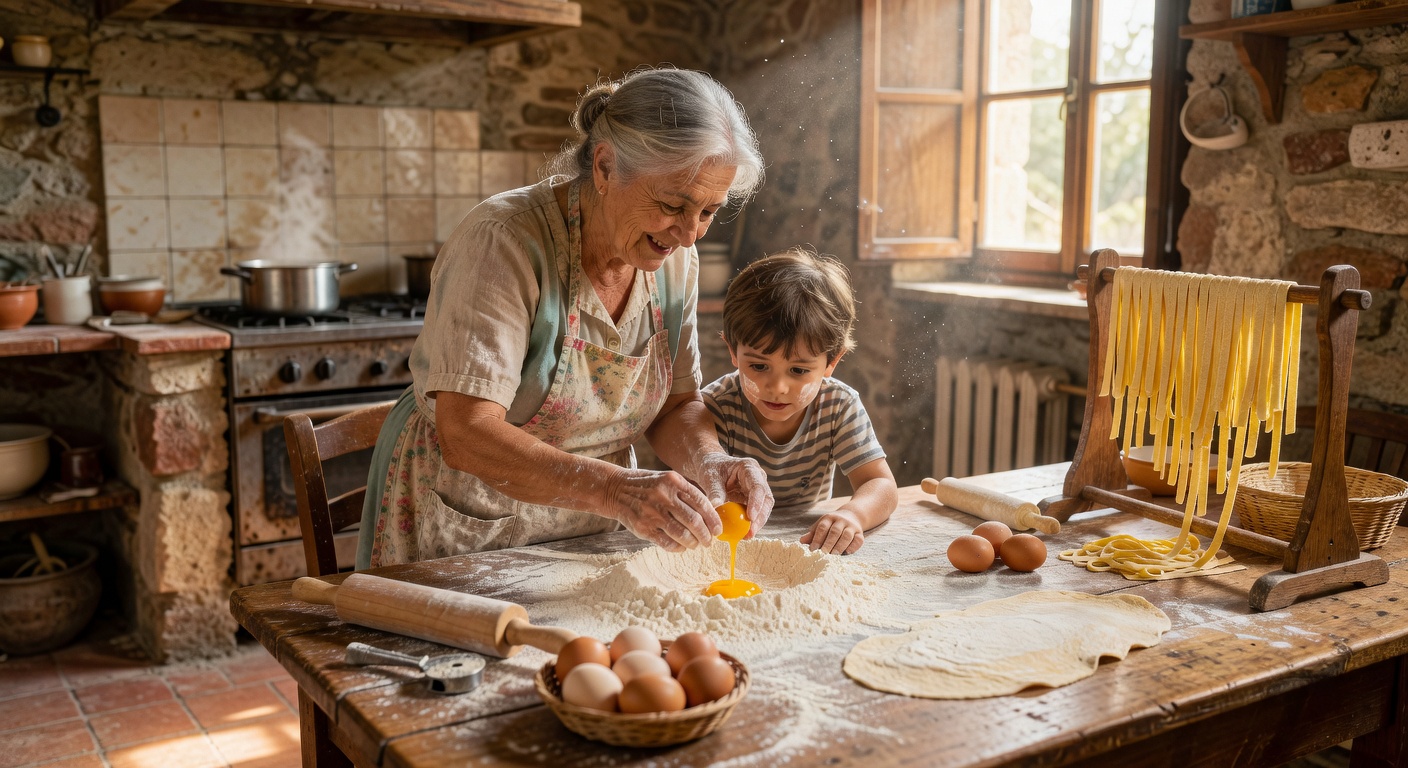
The Kitchen as Living Archive
If the market is the encyclopedia, the kitchen is where the stories are written. And like all good archives, kitchens hold evidence of the full complexity of history — including its violence. The Nikkei cuisine of Peru, which emerged from the Japanese immigrant community that arrived at the end of the nineteenth century and found itself adapting Japanese technique to Andean and Pacific coastal ingredients, is one of the world's most extraordinary examples of culinary synthesis. The ceviches of Lima's Nikkei restaurants carry the memory of displacement, adaptation, and the creative energy of people who had to invent a new cuisine because the old one could not be transported in its entirety across an ocean.
Arab merchants who arrived in Sicily during the centuries of their rule left behind a culinary legacy that is still visible in the Palermitan street food tradition: arancini, the fried rice balls that echo the Middle Eastern tradition of stuffed and fried grain dishes; the sweet-sour agrodolce sauces that recall North African cooking; the widespread use of raisins and pine nuts in savory dishes that feels distinctly out of step with mainland Italian cooking. To eat caponata in Palermo is to eat a dish that has absorbed nine hundred years of layered identity.
In Jamaica, Chinese immigrants who arrived as indentured laborers in the nineteenth century introduced rice cultivation techniques that transformed the island's food culture. The "rice and peas" that is now considered quintessentially Jamaican carries within it the trace of Chinese agricultural knowledge, absorbed and transformed beyond easy recognition into something entirely new. This kind of culinary archaeology — tracing the origin stories encoded in a dish — is available to any curious eater willing to ask who cooked this first, and why.
Eating With Locals: A Protocol
Across much of the world, the act of feeding a guest is not a commercial transaction — it is a declaration of relationship. In many parts of India, the obligation of the host to ensure that a guest has eaten sufficiently is so deeply ingrained that refusing a second helping requires careful negotiation. The host who has not fed you well has, in some sense, failed in a moral duty. This creates a social architecture around the meal that the Western traveler — accustomed to the simple mechanics of choosing from a menu — must learn to navigate with both appetite and grace.
In Turkey, the imperative of hospitality — the cultural force of misafirperver — extends to strangers encountered on the street, not only invited guests. Being waved into a tea house by a shopkeeper who expects nothing in return for the glass of çay he presses into your hands is not a sales technique; it is a social practice so old it predates the commercial economy in which it now sometimes awkwardly exists. The Japanese precision of serving order, in contrast, encodes status, relationship, and seasonal awareness in every plate's arrival — to serve incorrectly is not merely impolite but a failure of aesthetic and social intelligence simultaneously.
Five Dishes That Changed How I Travel
Some meals are not merely meals. They become the organizing memory around which entire journeys restructure themselves in retrospect. These are five of mine.
- Mole Negro, Oaxaca, Mexico A mole negro made properly requires upwards of thirty ingredients, multiple days, and a knowledge accumulated over generations. When a home cook in a Oaxacan village shared hers with me, I understood that I was tasting not a recipe but a philosophy — a belief that the most important things are worth the most effort, and that complexity, when achieved through patience, is its own form of beauty.
- Tagine, a private home in Marrakech, Morocco The tagine arrived after two hours of tea, conversation, and the gradual dissolution of the guest/host formality. By the time the lid was lifted, we had moved past tourism entirely. The preserved lemons, the olives, the lamb that had been slow-cooking since morning — these were flavors that required time to develop, and we had given them, and each other, exactly that.
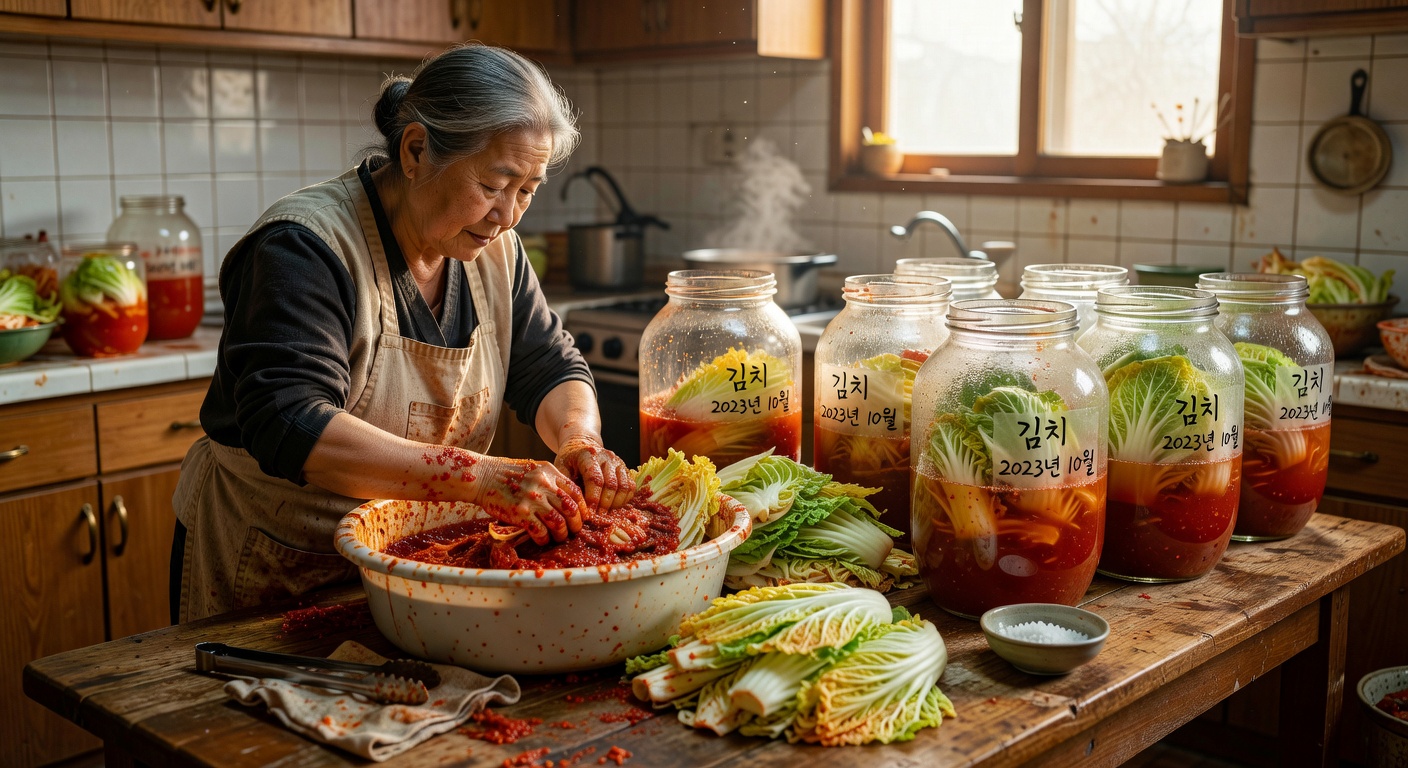
- Kimchi Jjigae, a Seoul apartment, South Korea My host had made kimchi jjigae — kimchi stew — from a jar of kimchi her mother had sent from Busan, made using the family's own recipe. The stew tasted of the specific fermentation of that household, that grandmother's hands, that family's particular calibration of spice and sourness. It was unrepeatable. That is precisely the point.
- Injera with Tibs, Addis Ababa, Ethiopia Eating injera — the spongy, slightly sour flatbread that serves as both plate and utensil — with tibs (sautéed meat) in a traditional Ethiopian household introduced me to a meal structure in which communal eating from a single plate is not a compromise of hygiene but a statement of belonging. You eat together because you are together. The injera is the grammar of that statement.
- Ceviche, a Lima Mercado, Peru The ceviche arrived at 11am, ice cold, shockingly acidic with lime, the fish translucent from its chemical cook in citrus. The market was loud and entirely uninterested in being picturesque. The woman who made it had been making it since before dawn. It tasted of mastery so complete it had become invisible — and of a city that lives on the ocean's edge and has spent centuries learning exactly what the sea, given the right treatment, is prepared to offer.
There is a moment in any genuine shared meal when the boundary between visitor and local becomes, temporarily, irrelevant. Not because cultural differences have been erased — they have not — but because the meal has created a temporary commons, a space of mutual vulnerability and mutual pleasure, in which both parties are simply people who are hungry, and grateful, and present. No tour can replicate this. No restaurant designed for foreigners can manufacture it. It requires showing up without a script, accepting what is offered, and trusting that the table has always been one of the most reliable places in the world to meet another human being across the distance of everything that separates you.